Chilli Hills
AI-Enhanced Product Visuals: Real Photography Meets Creative AI
The Challenge: Authenticity in an AI-Saturated Marketplace
AI-generated product images are everywhere now. E-commerce platforms are flooded with stunning visuals created entirely by algorithms - exotic backgrounds, dramatic lighting, impossible scenarios. But there’s a critical problem: fully AI-generated images fundamentally misrepresent the actual product.
Chilli Hills needed campaign content that could visually compete with AI-generated imagery. But they also needed something more valuable than beauty: trust. Their customers want to know what they’re actually buying. The product must be real. The marketing can be enhanced - but the product can never be fiction.
The solution required both worlds: visually striking assets that leverage AI’s creative power, but grounded in real product photography so authentic they’d pass regulatory scrutiny.
Our Philosophy: Photography-First AI
Here’s our principle: the product is always real.
We photograph every product with precision in our studio - clean lighting, true colors, accurate representation. This creates the foundation: a catalog-quality image of the actual product you’re selling.
From there, AI becomes a creative tool.
Rather than using AI to generate products, we use it to generate environments. We take our pristine studio shots and place them into:
- AI-generated backgrounds that would be expensive or impossible to shoot physically (campfire scenes, exotic outdoor settings, atmospheric bokeh)
- Creative scene compositions (product placed in realistic kitchen settings, BBQ environments, evening tableaus)
- Stylistic variations (the same product in summer versus winter aesthetics, minimalist versus lifestyle scenes)
The key insight: the product you see is the actual product. Only the environment is enhanced.
Before and After: Real Product, AI Story
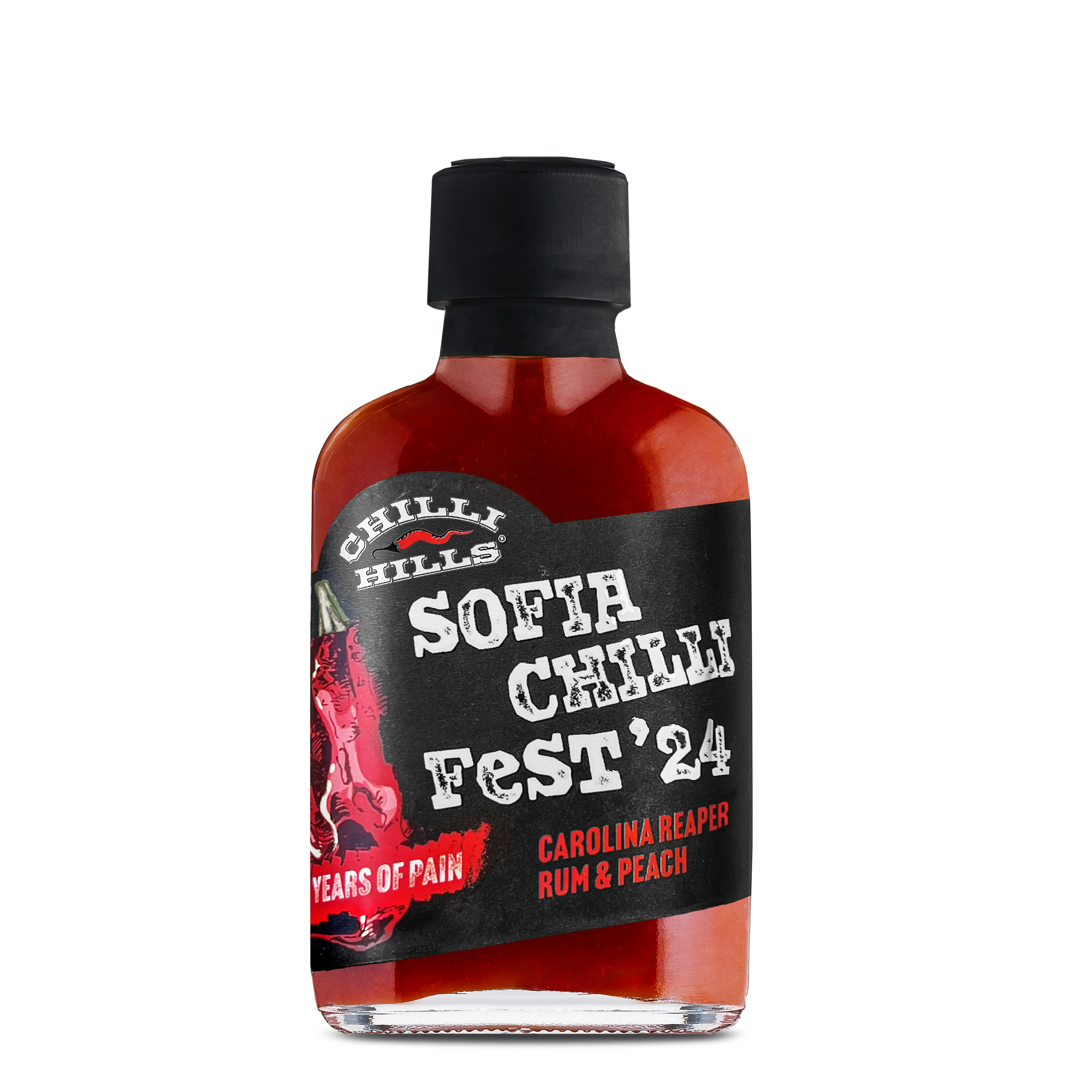
The Sofia Chilli Fest ‘24 edition starts as a pristine studio catalog shot - clean white background, perfect label visibility, optimized for e-commerce listings.
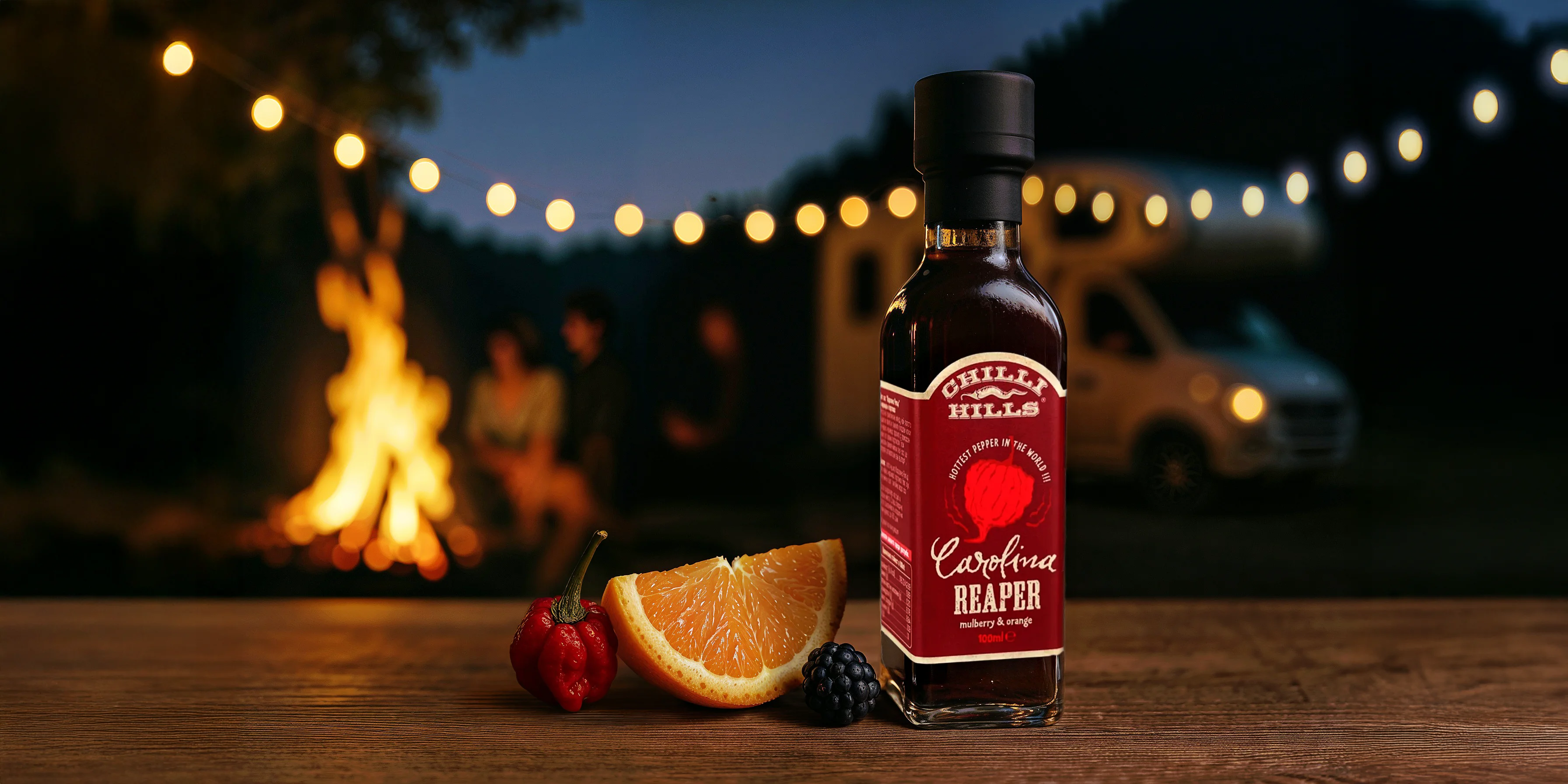
Using AI, the same real bottle is placed into a warm, golden-hour campfire scene: firelight flickering, bokeh string lights in the background, the suggestion of an evening gathering. The product is identical to what’s in the catalog. The story around it transforms entirely.
This is where AI shines as a creative amplifier rather than a replacement. You’re not asking “is this product real?” You’re asking “where do I want to use this product in my life?” The answer becomes a visual story - and the product is the hero, not the decoration.
Scaling AI Scenes Across the Range
The same methodology scales across the entire product line. Three hero sauces - Carolina Reaper, Hell Hot Sauce, and Extreme Chilli Sauce - each photographed cleanly in studio, then placed into a single AI-generated modern kitchen environment with teal-tiled backsplash.
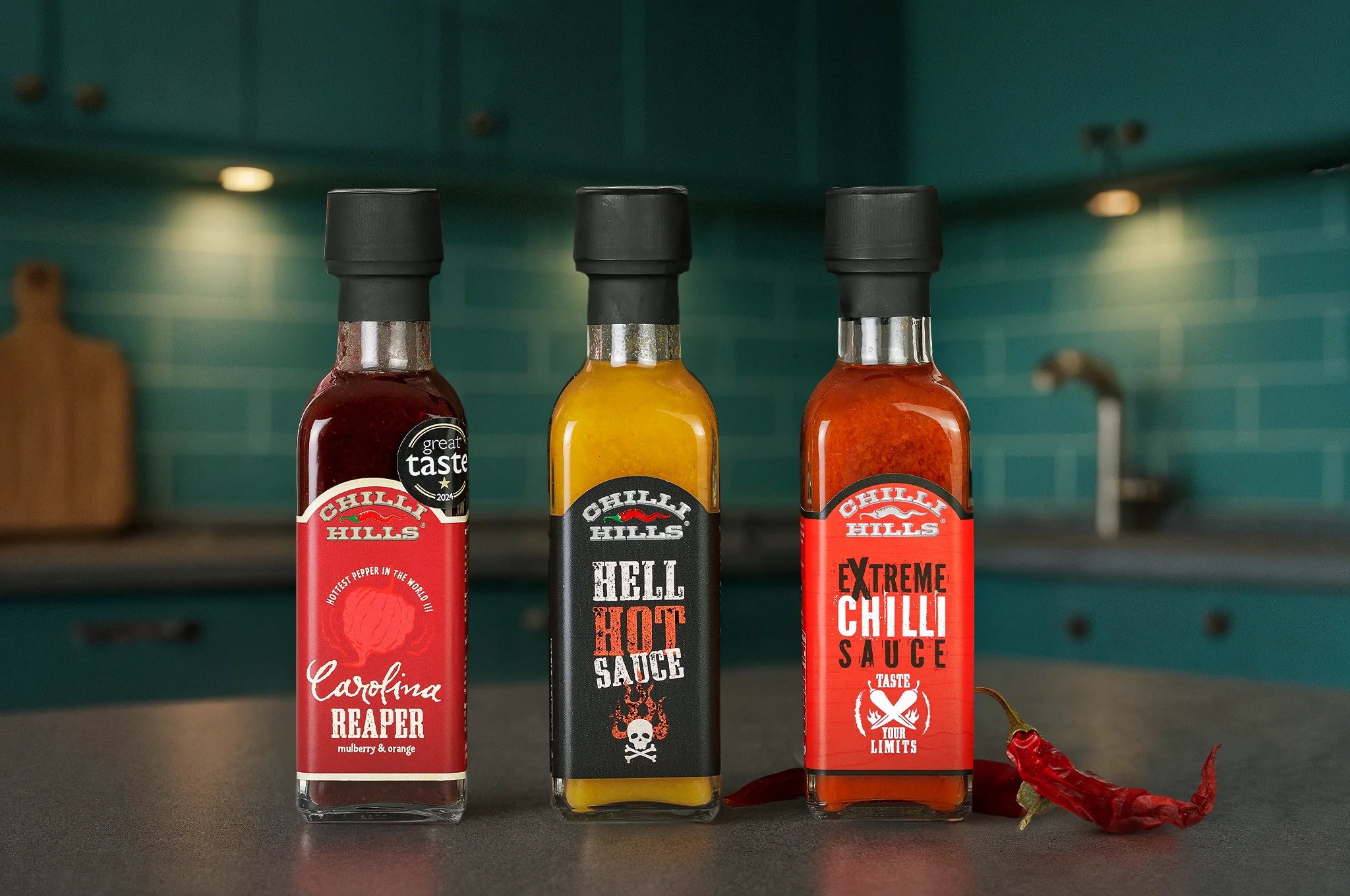
One AI background. Three real products. One cohesive campaign asset. This approach dramatically expands the variety of assets available for marketing without multiplying studio costs or photography days.
Creative Concept Pipeline: From Sketch to AI-Enhanced Reality
Not all campaigns start with product photography. Some begin with creative vision.
The “Fight of Chips” campaign demonstrates this workflow: from raw concept → line sketch → AI-enhanced final composite.
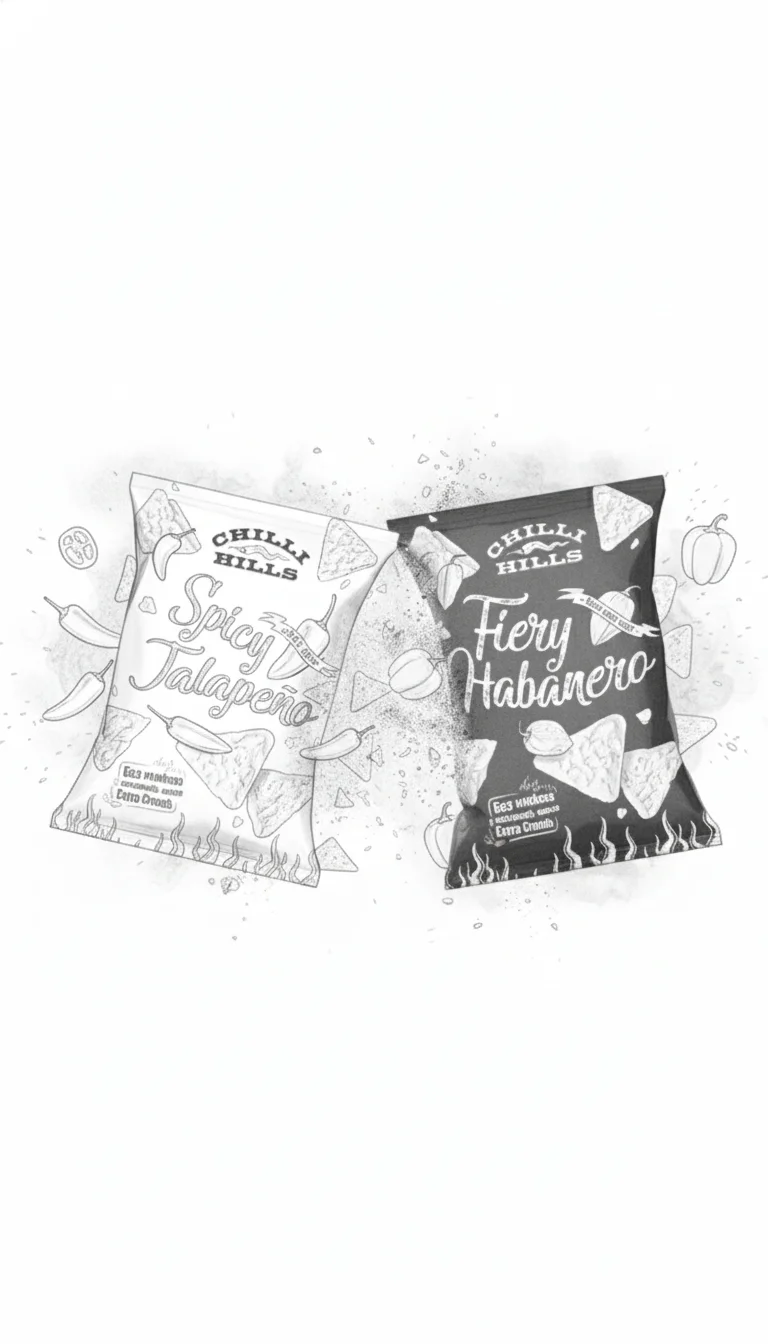
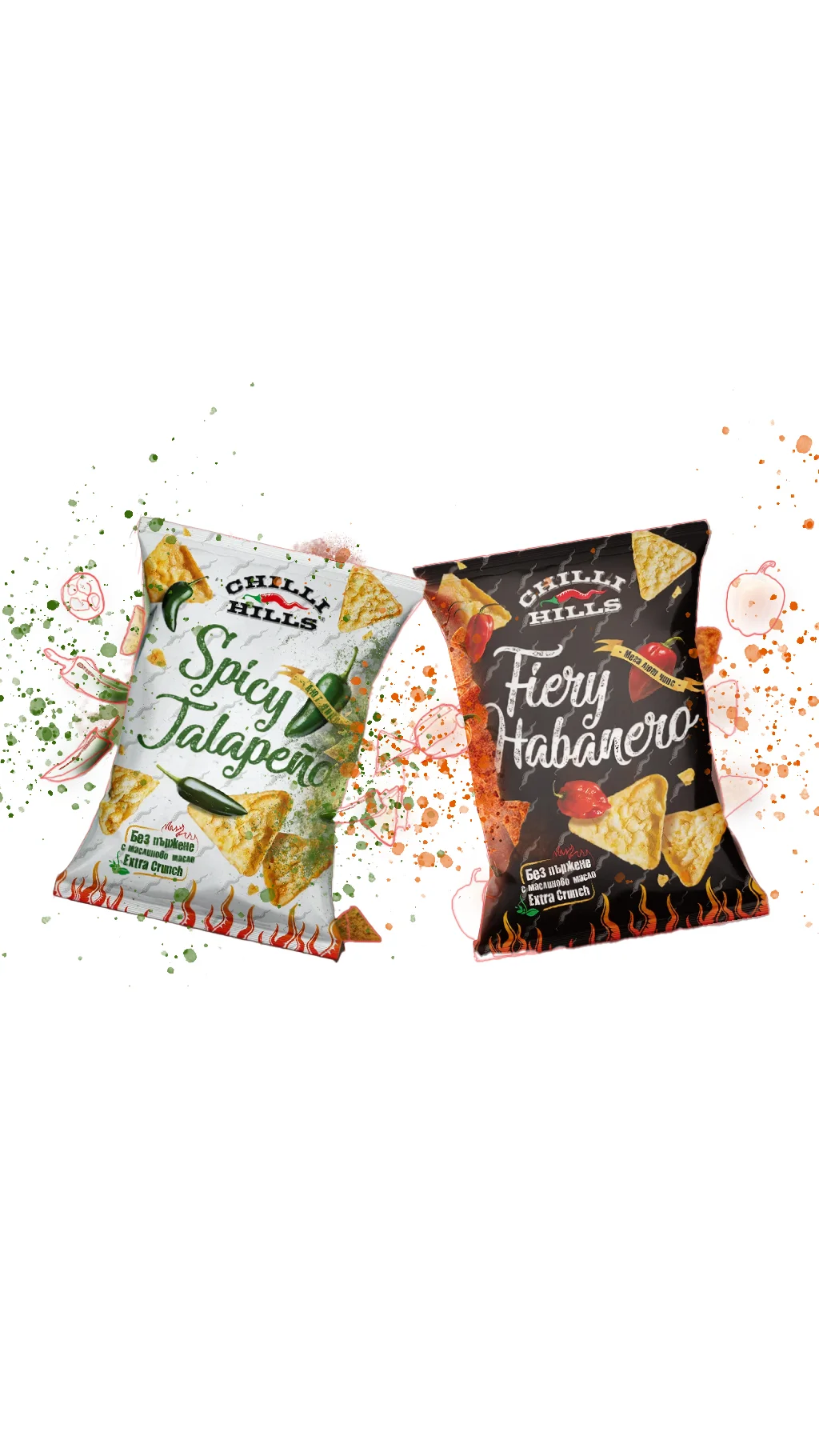
A designer sketches the initial idea. The concept is refined into line art with tonal exploration. Then AI steps in not to invent the product, but to enhance the environment and mood - dynamic floating composition, vibrant spice particle effects, bold energy that matches the “fight” theme.
This pipeline is powerful because it separates concerns:
- Concept design (human creativity, brand alignment)
- Product verification (real photography, accuracy)
- Environmental enhancement (AI creativity, mood and scale)
- Final composition (human polish, brand coherence)
Each step has a human decision point. AI amplifies creativity but never replaces the judgment that keeps the product real.
The AI Enhancement in Motion
The Carolina Reaper AI enhancement video shows the full compositing process - real studio photography meeting AI-generated environmental storytelling in a single straightforward asset.
Why This Matters: Compliance and Trust in 2026
The regulatory landscape is shifting. The EU AI Act enters its transparency enforcement phase in August 2026.
Marketplace platforms increasingly require disclosure when images contain AI-generated elements. Some are banning fully AI-generated product photography outright. The reasoning is sound: customers deserve to know if what they’re seeing is the actual product or a creative interpretation.
Our approach sidesteps this tension entirely:
The product is always photographed for real. This means:
- Content is disclosure-ready (AI elements are clearly secondary - backgrounds, scenes, mood)
- Platform compliance is built-in (real product + AI enhancement ≠ fully AI-generated)
- Customer trust is authentic (the product you see is the one you’ll receive)
- Regulatory exposure is minimal
As platforms tighten restrictions and consumers become more skeptical of AI imagery, authenticity becomes a competitive advantage. Brands that lead with real products win trust.
The Result
For Chilli Hills, the outcome is a diverse asset library that’s simultaneously:
- Visually competitive with fully AI-generated campaign imagery
- Authentic and verifiable (customers see the actual product)
- Regulatory compliant (transparent about AI enhancement, not deception)
- Cost-efficient (fewer shoot days, more asset variety)
- Campaign-ready (styled for different contexts and seasons without reshoots)
The key is inversion of the typical AI-image workflow. Instead of “how much of this can AI generate?”, the question becomes “how can AI enhance what we’ve already photographed?”
It’s photography-first thinking. Real product. Enhanced creativity.
Key Takeaway
AI is most powerful not when it replaces human craftsmanship, but when it amplifies it. In product photography, that means real products photographed with precision, enhanced by AI-generated environments that contextualize and dramatize without deceiving. The result is content that’s both creatively ambitious and authentically trustworthy - a combination that fully AI-generated imagery can’t claim.